

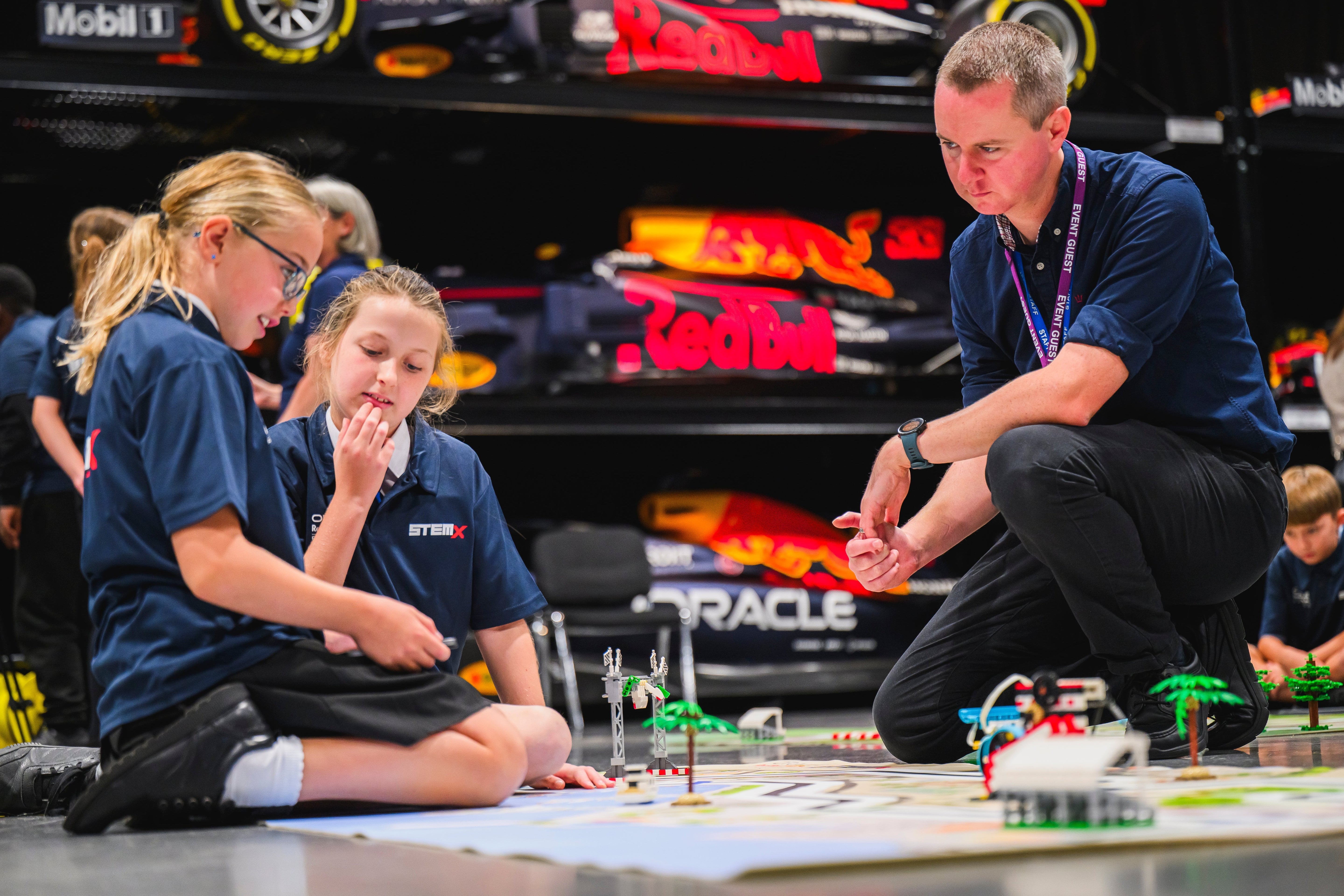

Today is World Youth Skills Day, and this year's theme, Skills for a Shared Future, couldn't be more relevant. The skills challenges facing the UK aren't just future concerns, they're already being felt by businesses across every sector. Preparing the next generation will take collaboration and businesses have an important role to play in helping young people develop the skills they'll need for the future.
The numbers are not ambiguous
The UK's skills gap is currently costing the economy an estimated £39 billion a year in lost productivity. Left unaddressed, that figure is projected to reach £120 billion by 2030. Skills England's 2026 annual report put it plainly: public investment alone cannot close the skills gap. And the data backs that up - employer-funded training has fallen by £10.6 billion since 2011, a drop roughly equivalent to the government's entire annual skills budget.
Meanwhile, 40% of today's skill sets no longer match what the job market needs. By 2030, 82% of new jobs in priority sectors, the industries named in the UK's own Industrial Strategy, will require post-secondary STEM-related education. The World Economic Forum estimates 22% of all jobs will transform significantly by the end of the decade due to AI and automation alone.
These aren't distant predictions, they're challenges businesses are already beginning to face, and with 2030 just four academic years away, investing in future skills can no longer be viewed as a long-term ambition. It's a priority for today.
The pipeline problem starts much earlier than hiring
The STEM skills gap isn't primarily a recruitment failure. It's an aspiration failure, and it's happening in primary schools.
Research consistently shows children begin forming views about which careers are "for people like them" by around age six or seven. By the time most businesses run a careers event or sponsor a university scholarship, a substantial proportion of the young people who could have filled their future roles have already quietly opted out, not because they lacked ability, but because nobody connected what they were learning in the classroom to where the world of work was actually heading.
The bridge between education and employment, as Skills England and the Gatsby Foundation have both noted, is not being built consistently or early enough. And that's a problem businesses are uniquely placed to help solve - not by waiting for policy to catch up, but by getting into classrooms now.
What "getting into classrooms" actually means
There's a version of employer engagement with schools that amounts to a one-off factory visit or a half-day careers fair. While these have some value, the research on what actually changes young people's aspirations and career trajectories points to something more sustained: repeated, hands-on contact with real professionals doing real work, embedded into the curriculum rather than bolted on as a one-off event.
This doesn't have to mean businesses designing or running programmes on their own. For many organisations, the most effective route is partnering with education specialists who handle curriculum design, safeguarding, and classroom delivery — while the business provides the funding, the industry context, and where appropriate, the people. Volunteers and employees can play a meaningful role in these programmes, but they're most impactful when supported by trained education professionals who ensure the experience is consistent and high-quality for every child.
In practice it might look like a six-week curriculum module connecting classroom learning to real industry problems, with business professionals contributing their expertise alongside a specialist at key points. Or a fully-resourced programme that arrives at a school ready to run, with the business's people there to give it purpose and relevance rather than to deliver it from scratch.
Amazon's Think Big programme, delivered in partnership with Creative Hut, is a strong example of how this model works at scale. Amazon funds fully-resourced, curriculum-aligned coding and robotics workshops that go directly into schools — delivered by Creative Hut's education specialists rather than left to individual employees to navigate alone. The result is a programme that reaches more than 100,000 young people a year across the UK, Ireland, the US and beyond, with consistent quality and measurable outcomes. The business provides the vision and the investment. The education expertise ensures it actually lands in the classroom.
The AI question
World Youth Skills Day 2026 has a specific focus on AI, and rightly so. The skills young people will need to work alongside AI systems aren't fully technical. Skills England's research with the British Academy found that what employers actually want as AI becomes embedded in the workplace is judgement, problem-solving, collaboration, digital fluency and what their 2026 report describes as "responsible AI capabilities." As more processes become automated, human skills - empathy, resilience and creative thinking - become more valuable, not less.
This has a direct implication for what schools teach and how businesses engage. The children in classrooms today will be the workforce of 2035 and beyond. Preparing them for that world doesn't mean teaching them to fear AI or to defer to it uncritically. It means giving them real tools, real challenges, and real contact with the industries that are already navigating these changes, so that by the time they enter the workforce, the landscape isn't alien to them.
That's what hands-on STEM education is for. Not just coding and robotics as standalone skills, but as a way of developing the kind of thinking - curious, iterative, collaborative, resilient, that no automation replaces.
Creative Hut works with businesses and organisations to deliver STEAM Challenge Programmes, curriculum-aligned learning, and meaningful employee volunteering in schools and communities across the UK. If you're planning your CSR or skills investment for the year ahead, please get in touch.




Share:
Why are we still judging a fish by its ability to climb a tree?
Sustainability and Climate Change Strategy