

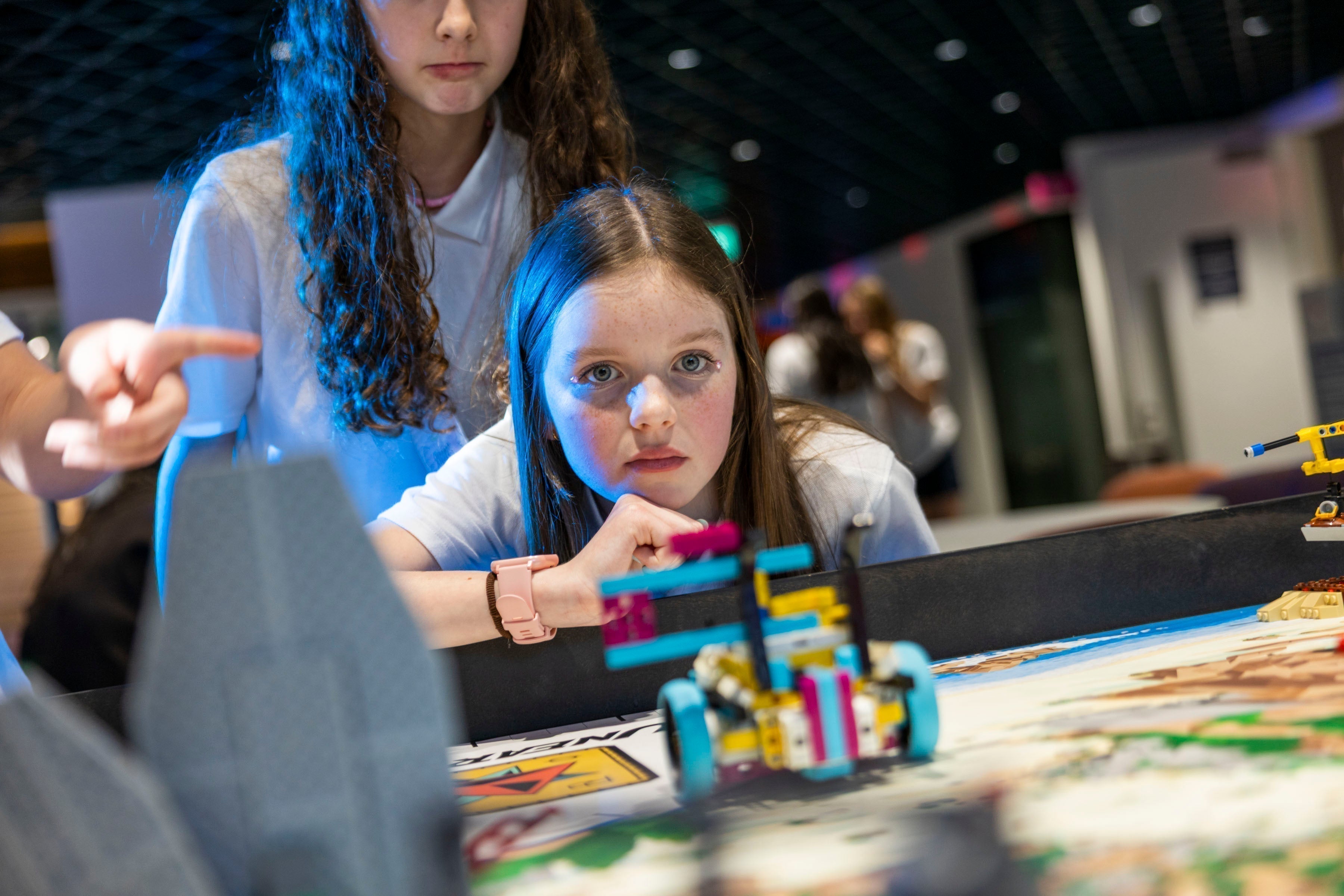

This week marks International Women in Engineering Day, a day for celebrating the women already shaping the industry. It's also a moment to look at a number that's been moving more slowly than most of us would like: across the UK, only around 16.5% of engineers are women. In the US it's closer to 13%. Progress, but gradual.
Businesses often respond with hiring initiatives: better job ads, returnship schemes, and women-only graduate programmes. These all help. But research suggests they're addressing the gap quite late in the process.
That's because the gap doesn't really start opening up when women apply for engineering jobs. It tends to open up years earlier, in classrooms, while children are still forming a sense of who gets to be an engineer.
The bias forms earlier than most people think
Stereotypes about who belongs in STEM don't arrive in secondary school. Research from the University of Houston has found children start absorbing the idea that science and engineering are "for boys" by around age six. By eight, girls already rate themselves as stronger at reading and writing than at maths and science, regardless of their actual results. And the pattern doesn't fade as children get older. A major meta-analysis spanning more than 40 years of research and 145,000 children across 33 countries found that as girls age, their bias toward seeing STEM as male actually strengthens.
Education and Employers' "Drawing the Future" study of 20,000 children put a number on when career aspirations actually lock in: largely by age seven, and already heavily shaped by gender stereotypes. By the time a school offers its first "careers in engineering" assembly, most children's sense of whether that career is for them has already been decided.
The result is what researchers call the "leaking pipeline". Girls who show real ability in maths and science begin quietly opting out, not because they can't do it, but because they've absorbed, very early, that engineering isn't where they're meant to end up.

What actually shifts the number
This is where the evidence gets genuinely useful, because it doesn't point to better careers advice at sixteen. It points to who walks into a classroom at six, eight, and eleven.
Research on female role-model interventions has found something specific: when girls aged 12 to 16 spend time with women working in STEM, it measurably increases how much they enjoy maths, how confident they feel about succeeding in it, and how seriously they consider a STEM career, while measurably reducing the gender stereotypes they hold. The effect isn't vague inspiration. It's a shift in belief about their own competence, and that shift is what predicts the choices they make later.
The same studies are consistent on the mechanism. It isn't exposure to engineering in the abstract; it's exposure to a real person doing the job, who looks like them, in front of them, more than once. A single careers talk moves the needle slightly. Sustained contact, the kind woven into hands-on projects rather than one-off assemblies, moves it considerably further.
Stephanie Travers is a good example of what that exposure can lead to. She grew up watching Formula 1 with her family in Zimbabwe, surrounded by engineering through her father's and grandfather's workshops, and went on to become a Trackside Fluid Engineer for PETRONAS and Deputy Team Principal of Team X44. She now works at Mission 44, bringing young people from underrepresented backgrounds trackside to meet engineers and try STEM workshops first-hand. Her own advice to them is simple: belief comes from being in the room, not from waiting until you feel ready. It's the same mechanism the research points to, just lived out in motorsport instead of a classroom.
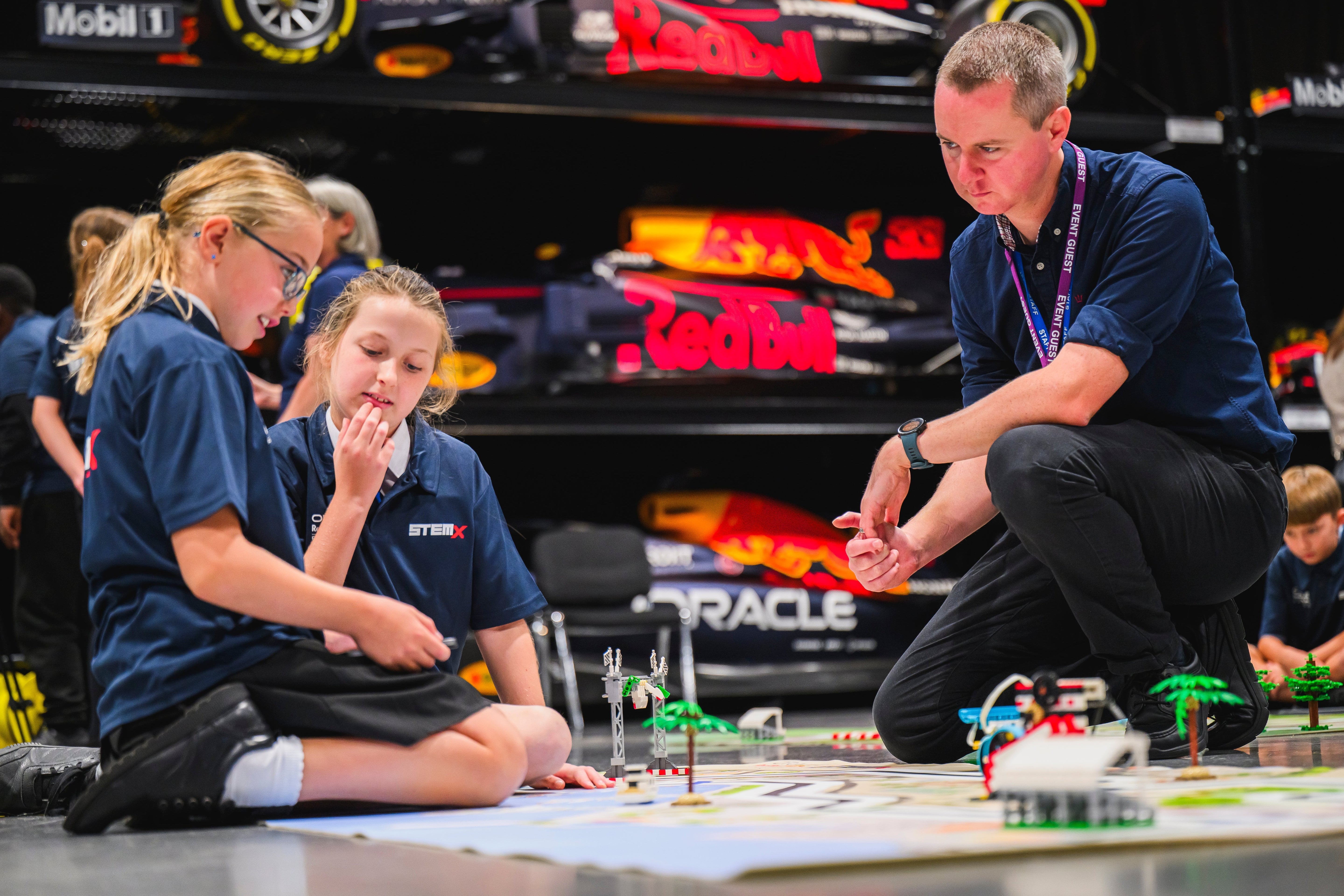
This is exactly the gap our programmes are built to close. Through meaningful employee volunteering opportunities, we give engineers, technicians and STEM professionals a structured way to get into classrooms and talk through their own career journey with children, not as a one-off assembly, but as part of an ongoing relationship with a school. Volunteers run hands-on workshops alongside teachers, answer the real questions children have about what the job actually involves, and come back more than once, which the research shows is what makes the difference between a nice memory and a shifted belief.
We also work with partners to embed that contact into curriculum-aligned schemes of work rather than leaving it as a standalone event. A scheme of work that returns to the same class across a term gives girls repeated, structured exposure to engineering as something they do, not just something they're told about, and gives your volunteers a consistent, well-supported way to take part term after term.
Why this shortage matters beyond the moral case
Engineering's skills shortage isn't a perception problem, it's a numbers one. The IET's 2025 data found 76% of UK engineering employers are struggling to recruit for key roles, and EngineeringUK puts the annual shortfall at up to 59,000 people against demand for 124,000 core engineering roles a year. Meanwhile only around 16.5% of the existing workforce is female. A pipeline that's roughly 85% male, in a profession that already can't fill three out of four vacancies, isn't recruiting from anywhere near the full pool of available talent.
Closing that gap isn't about lowering a bar or filling a quota. It's about making sure the children who could become brilliant engineers, the ones with ability and real curiosity, don't quietly rule themselves out at age seven because nobody who looked like them ever stood in front of their class with a robotics kit.

What this looks like in practice
The research is consistent enough now to translate into a few clear principles for any business serious about this:
Start before secondary school. If a programme's first contact with girls in STEM happens at GCSE options time, it's arriving after most of the relevant beliefs have already formed. Primary school is not too early.
Make the role model real, not symbolic. A poster of a woman in a hard hat does very little. A woman engineer running an actual hands-on session, taking real questions, building something alongside the children, does a great deal.
Repeat it. One visit is a nice memory. Several visits, ideally woven into the curriculum rather than bolted on, are what shift self-belief and aspiration.
Make the work itself hands-on. Confidence in STEM is built by doing it, not by hearing about it. Coding, robotics and design challenges give girls direct evidence of their own competence, which is the thing the stereotype undermines in the first place.
Track who you're reaching, not just how many. A programme that reaches the same well-served schools every year isn't closing the gap, it's serving the children least affected by it. Equity of reach has to be a measured outcome, not an assumption.
International Women in Engineering Day is a good moment to celebrate the women already in the profession. The deeper opportunity is making sure there's a much bigger group of girls coming up behind them who never had to fight their way past a stereotype to get there. That work doesn't start in the careers office. It starts in the classroom, years earlier than most businesses think to look.
Want to bring real engineers and hands-on STEM challenges into classrooms, and help close the gap before it opens? Explore our STEM, sustainability and CSR programmes and discover how your organisation can create meaningful, measurable impact.




Share:
From the Classroom to Smart Factories
Why are we still judging a fish by its ability to climb a tree?