

Artificial Intelligence is no longer a future concept - it's a lived reality for the children we teach. From voice assistants and personalised recommendations to image recognition and smart devices, AI quietly shapes how young people learn, communicate, and navigate their world. This makes primary school a critical environment for building early AI literacy in a way that feels safe, age-appropriate, and empowering.
At Creative Hut, we believe AI education in primary should begin with curiosity. Pupils don’t need technical theory to build foundational understanding; they need hands-on experiences, critical thinking opportunities, and guided exploration. With the right approach, AI learning can progress naturally from KS1 awareness to KS2 confidence.
Let’s explore how this learning journey can unfold.
Making AI Real for Young Children
For younger pupils, AI should feel familiar, fun and concrete, not technical or complicated. The best way to introduce it? Use examples they already know.
Simple classroom conversations might include:
- Netflix guesses what you might like to watch next
- Maps apps work out the quickest route home
- Siri can answer questions, but doesn’t have feelings
These conversations help children develop three important ideas:
- AI exists all around them
- AI can be helpful
- AI is not human
It’s important that children understand early on that AI doesn’t think or feel like humans do. It can make mistakes. It can give the wrong answer. And sometimes it can even be biased, depending on how it was trained. This early awareness builds healthy curiosity and critical thinking.
How AI “Learns” Data, Patterns and Machine Learning
At the core of AI is a simple principle: machines learn by identifying patterns in data. Even in primary settings, this concept can be introduced through developmentally appropriate activities.
KS1: Learning Through Sorting and Patterns
Activities such as:
- Sorting objects by shape or colour
- Grouping pictures into categories
- Spotting visual patterns
Mirror the way algorithms learn to recognise information. Without mentioning “machine learning”, pupils begin to understand classification, a foundational AI concept.
KS2: Training Their Own Mini AI
By KS2, pupils are ready for hands-on, structured machine learning work. Using child-friendly tools like Teachable Machine, pupils can:
- Collect images of objects or faces
- Train a simple model to recognise them
- Link their trained AI to Scratch projects
- Test how accurate (or inaccurate!) it is
This stage introduces powerful big-picture learning:
- Data quantity and quality matter
- AI can be wrong
- Bias affects results
Alongside this, pupils develop strong data-handling skills, creating charts, collecting results, and analysing information. These are core skills that directly support future AI understanding.
Algorithms and Computational Thinking: The Engine Behind AI
Behind every AI system is a set of instructions, also known as an algorithm. This is where traditional computing lessons fit perfectly with AI education. Algorithmic thinking forms the foundation that enables children to understand how intelligent systems function.
KS1: Step-by-Step Thinking
Young pupils learn that:
- Computers follow instructions exactly
- Sequences matter
- Predicting outcomes requires logic
Activities such as:
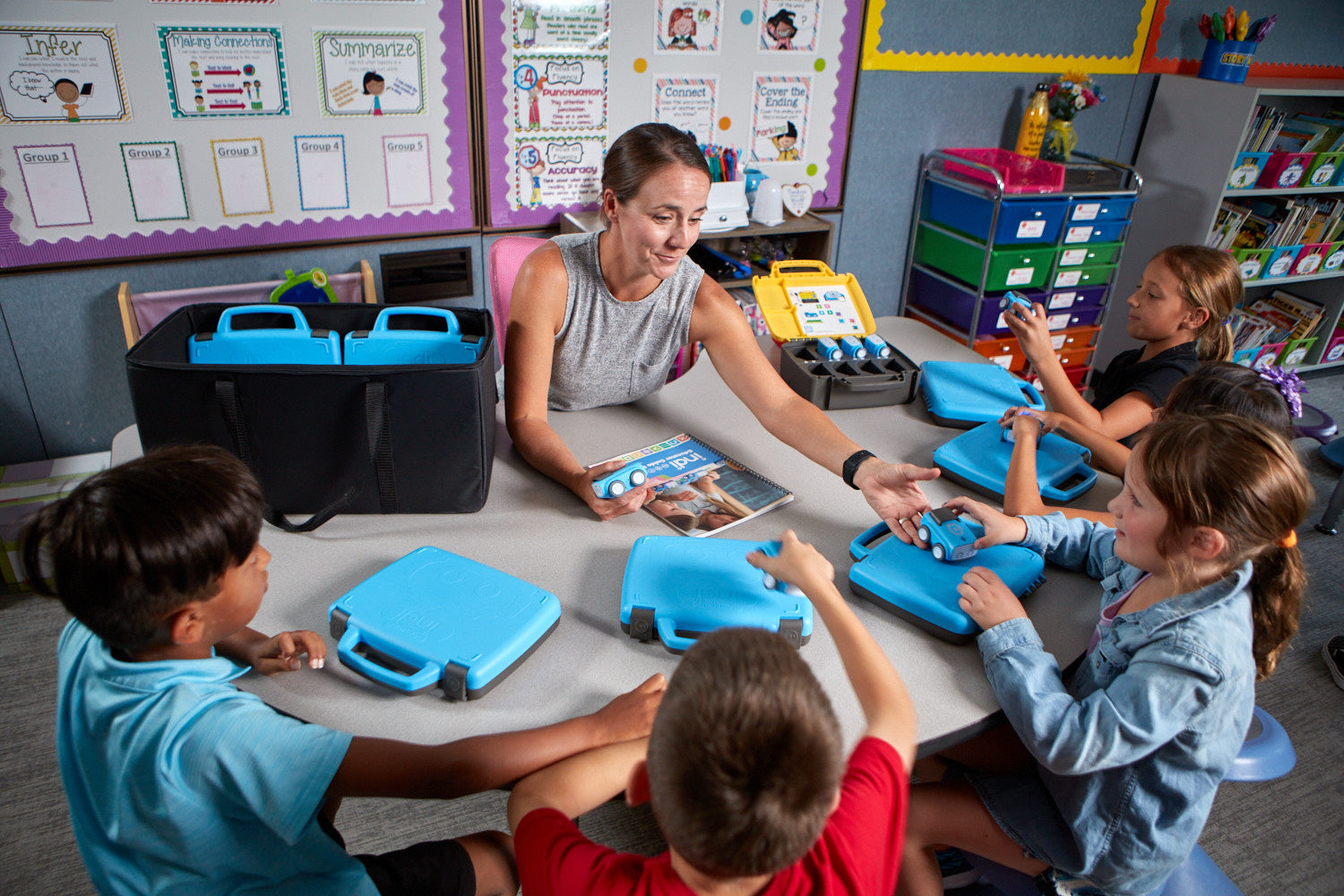
- Programming floor robots like Sphero Indi
- Giving instructions for simple animations
- Predicting what will happen next
These build the foundations of logical thinking and problem-solving.
KS2: Real Programming Skills
By KS2, learners are introduced to:
- Loops
- If-then conditions
- Variables
- Debugging mistakes
They begin breaking complex tasks into manageable steps, mirroring real-world approaches used in AI and software engineering. Through this, AI becomes demystified; it is understood as software built from rules and decisions rather than “magic”.
Ethics, Bias and Digital Citizenship: Teaching AI Responsibly
AI education must also develop digital responsibility. Understanding limitations and risks helps children navigate emerging technologies with confidence.
Understanding AI’s Limits
KS1 Focus:
- AI can make mistakes
- Computers don’t experience feelings
- Not everything online is true
KS2 Focus:
- Why might an AI make a mistake?
- What happens if it’s trained on unfair data?
- What personal information is safe to share with a machine?
Spotting Misinformation
As AI-generated images, voices, and videos become more common, children also need to learn:
- Not everything they see online is real
- Some content is misleading or fake
- Reliable sources matter
These lessons link perfectly with online safety and citizenship education, which are already part of the primary curriculum.
Where Does AI Fit in the Curriculum?
As of 2025, AI isn’t mentioned directly in the current Primary Computing Curriculum, but nearly all the building blocks are already there:
- Algorithms
- Programming
- Data handling
- Online safety
Schools are already laying the foundations without needing a complete curriculum overhaul.
Looking ahead, national curriculum reviews now place increasing importance on:
- Digital and media literacy
- Critical thinking
- Challenging misinformation
Education experts and global organisations like UNESCO also agree: AI literacy should begin in primary school - at an age-appropriate level.
The Big Picture: Growing with AI
AI education does not need to be complex, technical, or overwhelming. When built gradually, it strengthens the essential qualities young people need in a digital world:
KS1 builds early curiosity, pattern spotting and safe awareness.
KS2 builds data skills, machine learning understanding, responsible use, and critical evaluation.
By building knowledge step by step, teachers help pupils become:
- Confident digital users
- Critical thinkers
- Responsible future citizens in an AI-driven world
And perhaps most importantly - they’ll understand that AI is a powerful tool, but humans always stay in control.
In our next AI blog, we’ll be sharing a range of practical, classroom-ready activities you can use with your pupils to bring AI concepts to life in fun and meaningful ways.



Share:
AI for All: What Children Really Need to Learn About Artificial Intelligence
LEGO® Education Portfolio Update and exciting news!